Search something
Home
 / 
Explore
 / 
King George V Dock

King George V Dock

Holding the line between river and dock.

Scroll to content
What We Do
Highlights
Map
FAQs

What We Do At King George V Dock

Protecting the Network

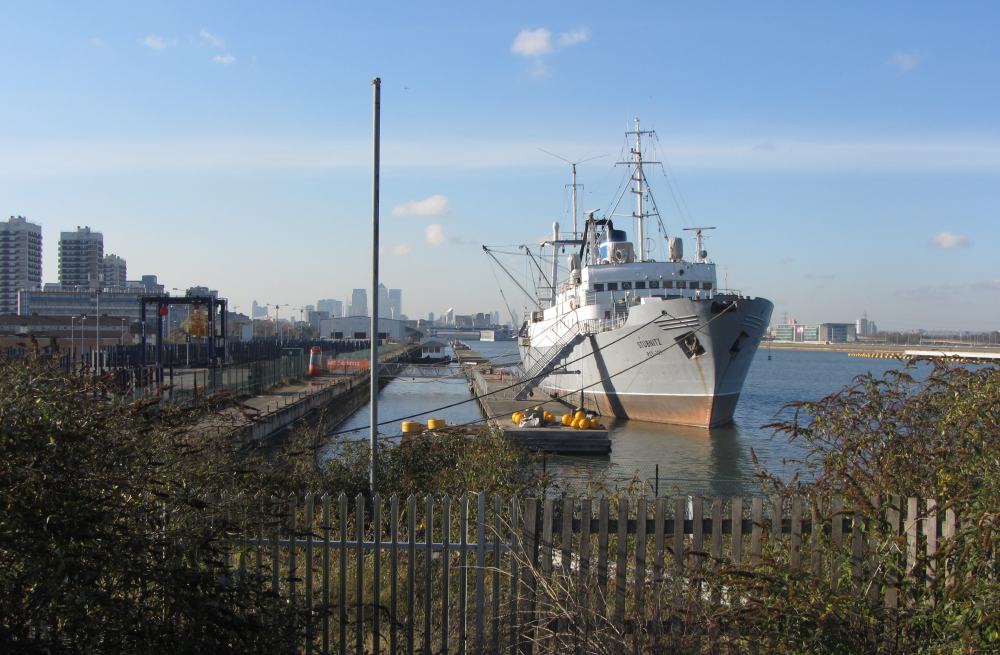
King George V Dock is home to infrastructure that is fundamental to how the Royal Docks function, from the KGV Lock that provides the principal gateway between the Thames and the docks, to the Bascule Bridge crossing, and the EA Floodgate and concrete dolphins that form the flood defences protecting the entire network.
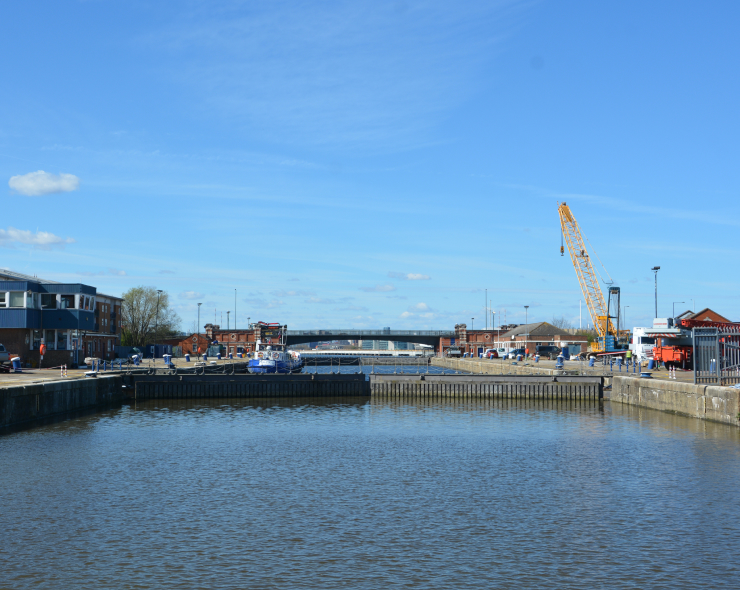
King George V Dock | KGV Lock | Explore | Royal Victoria Docks

Engineering

The KGV Lock

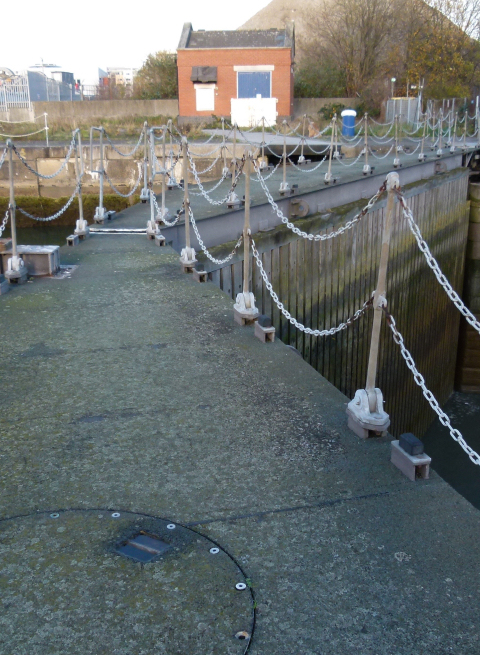
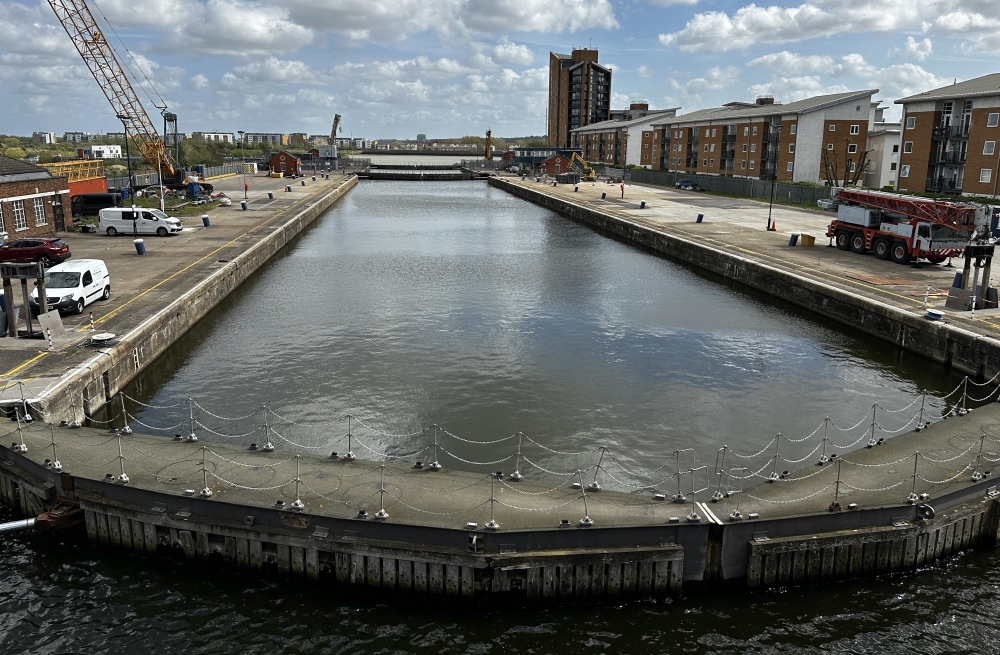
The KGV Lock is the main point of entry between the Thames and the Royal Docks, a 243 metre three-gate lock that also forms a critical part of the area’s flood defence. We manage and maintain it to the highest standards, ensuring it continues to perform safely and reliably for the network and the communities that depend on it.
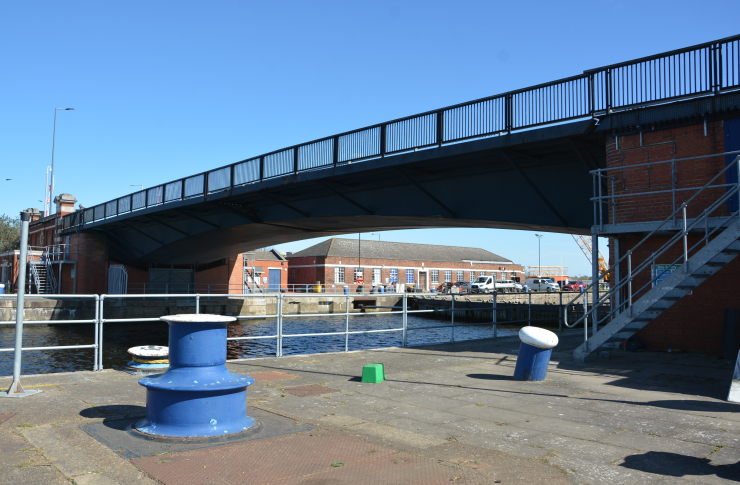
King George V Dock | Bascule Bridge | Explore | Royal Victoria Docks

Infrastructure at Work

From the Bascule Bridge raising its twin leaves for passing vessels, to the EA Floodgate protecting the docks from the Thames, King George V Dock is where some of the most vital, and most visible, engineering work in the Royal Docks takes place.

King George V Dock

Highlights

  • KGV Lock

    The King George V Lock has served as the main entrance from the Thames into the Royal Docks for over a century. A 243 metre three-gate lock that doubles as a critical flood defence structure.

  • Bascule Bridge

    Sitting at the Thames entrance to King George V Dock, the Bascule Bridge has been lifting its twin leaves for passing vessels since 1990.

  • Concrete Dolphins

    Fixed mooring structures positioned in the water at King George V Dock, the concrete dolphins guide and secure vessels navigating this stretch of the Royal Docks, quietly doing one of the most essential jobs on the water.

  • Airport Cut Berth – Spithead

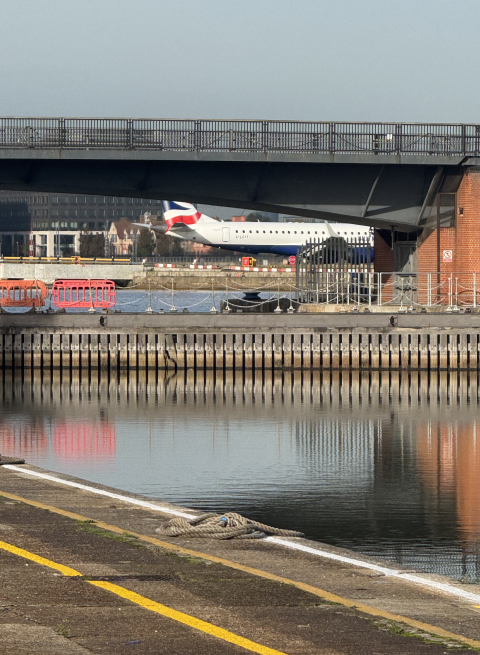
    Sitting alongside London City Airport at the southern edge of the Royal Docks, the Airport Cut Berth at Spithead provides a dedicated berthing area within King George V Dock.

  • EA Floodgate

    A critical piece of flood defence infrastructure within King George V Dock, the EA Floodgate plays a vital role in protecting the Royal Docks and the communities that surround them.

1 of 5

Key figures

Opened in
1921
by King George V himself, making it the last of the Royal Docks to be built and completing the largest enclosed dock system in the world at the time
Over
acres of dock, built by more than 1,500 workers at a cost of £4.5 million, and large enough to accommodate ocean liners including the 36,000-ton RMS Mauretania
A lock
long, connecting the dock directly to the River Thames at Gallions Reach, managed by Royal Docks Waterways and still in active use today
  • Opened in
    1921
    by King George V himself, making it the last of the Royal Docks to be built and completing the largest enclosed dock system in the world at the time
  • Over
    acres of dock, built by more than 1,500 workers at a cost of £4.5 million, and large enough to accommodate ocean liners including the 36,000-ton RMS Mauretania
  • A lock
    long, connecting the dock directly to the River Thames at Gallions Reach, managed by Royal Docks Waterways and still in active use today

FAQs

We will keep this section updated, as new information comes available and we will show clearly what information has been added after the website was launched.

What is King George V Dock and when was it built?

Construction began in 1912, built by the Port of London Authority, but was delayed by the First World War and not completed until 1921, making it the last of London’s great enclosed docks. Like the others, it closed to commercial traffic in 1981 once modern container ships had outgrown it.

What's on the site today?

London City Airport was built on the dock in 1987. Part of the dock was filled in with rubble from demolished buildings to create the site, and the runway itself sits on a concrete raft floating over steel piles driven into the old dock bed.

Is there a DLR connection?

Yes, King George V DLR station, on the London City Airport branch, opened in December 2005 and takes its name from the dock.

Get In Touch

We’re keen to hear from you, whether it is about pursuing an opportunity, or finding out more as a local stakeholder or resident.

Newsletter

Leave your name, email and organisation (if relevant) and we’ll keep you posted with updates.